
Water Heater Welding Machine
Wuxi Qineng Welding System Co., Ltd.: Your Professional Water Heater Welding Machine Manufacturer!
Wuxi Qineng Welding System Co., Ltd. is a high-tech enterprise with R&D capability, which possesses dozens of domestic patents (with the visual laser dual-tracking welding system as the core). Qineng has been engaged in welding technology research for more than 50 years. We have a team of experienced technical personnel, which equipped ourselves with sufficient technical power to provide our customers with high quality and reasonable price products.
Powerful R&D Capabilities
Our company stands as a core competitive advantage. Continuous technological innovation and product upgrades enable the company to consistently deliver high-performance welding equipment that meets market demands. These machines are highly regarded both domestically and internationally, finding their way into global markets like the USA, Turkey, and Brazil, earning widespread acclaim from customers.
Comprehensive Product Portfolio
Our company specializes in producing a complete range of automated welding equipment for various applications, including TIG, MAG, MIG, PAW, and related ancillary equipment. This extensive product lineup ensures the company can address the diverse needs of clients across different industries, efficiently and effectively meeting production requirements from LPG cylinders to pressure vessels.
Dedicated to Smart Manufacturing
In the push towards smart manufacturing, we are committed to fulfilling sophisticated customer demands by driving the transformation towards intelligent production processes. The company's technical team continually explores how to leverage cutting-edge automation technology and smart control systems to enhance production efficiency, reduce labor costs, and ensure product quality consistency and reliability.
Open Communication and Collaboration
We place great emphasis on communication and collaboration with clients. The company welcomes visitors from around the globe to its factory to witness its production capabilities and technological prowess. Furthermore, Qi Neng is eager to send its technical teams to customer sites to gain a deep understanding of their needs and offer tailored solutions. This open and dedicated approach enables Qi Neng to serve its clients better, fostering long-term, stable partnerships.
-
![Plasma Tunnel Welding Machine]() Plasma Tunnel Welding MachinePlasma welding, or plasma arc welding (PAW), is used in many industrial sectors. A versatile and high-performance welding technique, the plasma welding process can be used to produce top-quality...read more
Plasma Tunnel Welding MachinePlasma welding, or plasma arc welding (PAW), is used in many industrial sectors. A versatile and high-performance welding technique, the plasma welding process can be used to produce top-quality...read more -
![Stainless Steel Water Heater Circumferential Welding Machine]() Stainless Steel Water Heater Circumferential Welding MachineThis horizontal-type double-head circumferential TIG welding equipment is used for stainless steel solar water tanks, it is equipped with pneumatic middle top support and two guns for simultaneous...read more
Stainless Steel Water Heater Circumferential Welding MachineThis horizontal-type double-head circumferential TIG welding equipment is used for stainless steel solar water tanks, it is equipped with pneumatic middle top support and two guns for simultaneous...read more -
![Stainless Steel Water Heater Circumferential Welding Machine]() Stainless Steel Water Heater Circumferential Welding MachineThis horizontal type double-head circumferential TIG welding equipment is used for stainless steel solar water tanks, it is equipped with pneumatic middle top support and two guns for simultaneous...read more
Stainless Steel Water Heater Circumferential Welding MachineThis horizontal type double-head circumferential TIG welding equipment is used for stainless steel solar water tanks, it is equipped with pneumatic middle top support and two guns for simultaneous...read more -
![Enamel Water Heater Circumferential Welding Machine]() Enamel Water Heater Circumferential Welding MachineThis automatic double head circumferential welding machine is used to complete the circumferential welding of enamel water heater tanks(need to be assembled first), mainly composed of base,...read more
Enamel Water Heater Circumferential Welding MachineThis automatic double head circumferential welding machine is used to complete the circumferential welding of enamel water heater tanks(need to be assembled first), mainly composed of base,...read more -
![Galvanized Steel Water Heater Circumferential Welding Machine]() Galvanized Steel Water Heater Circumferential Welding Mac...This automatic double head circumferential welding machine is used to complete the circumferential welding of galvanized steel water heater tanks(need to be assembled first), mainly composed of...read more
Galvanized Steel Water Heater Circumferential Welding Mac...This automatic double head circumferential welding machine is used to complete the circumferential welding of galvanized steel water heater tanks(need to be assembled first), mainly composed of...read more -
![Water Heater Longitudinal Welding Machine]() Water Heater Longitudinal Welding MachineThis water heater longitudinal welding machine adopts open straight structure, pneumatic bracket with universal bearing. The workpiece is pressed by piano key finger, the back of the weld is...read more
Water Heater Longitudinal Welding MachineThis water heater longitudinal welding machine adopts open straight structure, pneumatic bracket with universal bearing. The workpiece is pressed by piano key finger, the back of the weld is...read more -
![Water Heater Pipe Joint Welding Machine]() Water Heater Pipe Joint Welding MachineThis pipe joint welding machine adopts new transverse structure, single head, can weld joints of one or two pipe diameters for the barrel head. The workpiece is fixed, the welding gun rotates to...read more
Water Heater Pipe Joint Welding MachineThis pipe joint welding machine adopts new transverse structure, single head, can weld joints of one or two pipe diameters for the barrel head. The workpiece is fixed, the welding gun rotates to...read more -
![Plasma Tunnel Welding Machine]() Plasma Tunnel Welding MachineThis Plasma Tunnel Welding equipment adopts the automatic seam finding mechanism of plasma tunnel welding machine, including base, column, positioning knife, positioning knife driving device for...read more
Plasma Tunnel Welding MachineThis Plasma Tunnel Welding equipment adopts the automatic seam finding mechanism of plasma tunnel welding machine, including base, column, positioning knife, positioning knife driving device for...read more

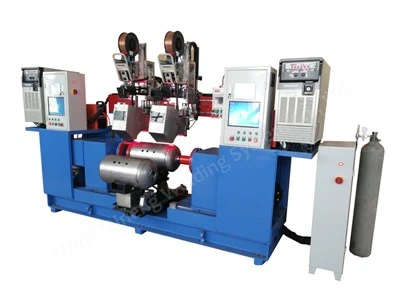

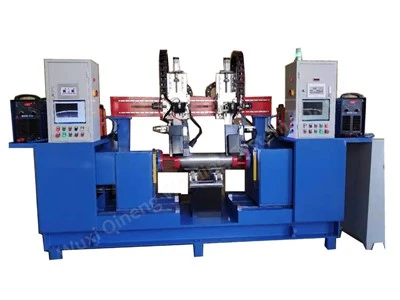
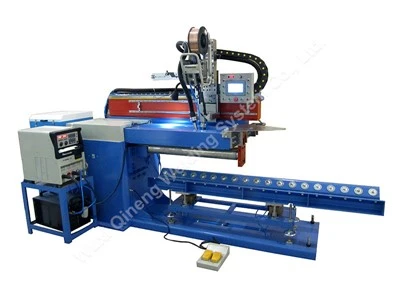
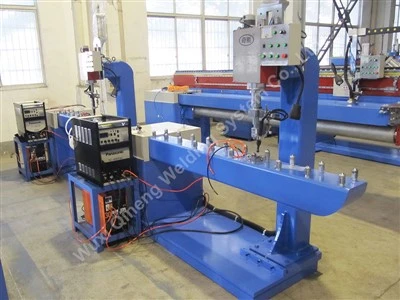
Welding machines play a crucial role in the manufacturing and repair processes of various industries, including the production of household appliances like water heaters. The application of welding technology in the construction of water heaters ensures durability, efficiency, and safety. Water heaters are essential appliances in residential and commercial settings, providing hot water for various purposes. The manufacturing of water heaters involves the assembly of multiple components, such as the outer shell, inner tank, heating elements, and various fittings. Welding machines are employed to join these components, ensuring a robust and leak-proof construction.
The Role of Welding Machines in Water Heater Manufacturing
Joining Metal Components
The primary function of welding machines in water heater manufacturing is to join metal parts. This includes welding the inner tank, which is typically made of steel or stainless steel, to ensure it can withstand high pressure and temperature. The outer shell, often made of aluminum or steel, is also welded to provide a sturdy and protective casing.
Sealing and Insulation
Welding machines help in creating airtight seals, preventing leaks and maintaining the efficiency of the water heater. Proper sealing is crucial for the insulation of the inner tank, which keeps the water hot for extended periods and reduces energy consumption.
Attachment of Fittings
Various fittings, such as inlet and outlet pipes, pressure relief valves, and thermostats, need to be securely attached to the water heater. Welding ensures these fittings are firmly in place, minimizing the risk of leaks and malfunctions.
Advantages of Using Welding Machines in Water Heaters




Strength and Durability
Welding provides strong and durable joints that can withstand the high pressure and temperature conditions inside a water heater. This ensures the longevity of the appliance and reduces the likelihood of failures and repairs.
Leak Prevention
Proper welding techniques create airtight and watertight seals, preventing leaks that could lead to water damage and energy inefficiency. This is particularly important for the inner tank, where even minor leaks can compromise the performance of the water heater.
Improved Efficiency: Welded joints contribute to the overall efficiency of the water heater by ensuring that the inner tank remains well-insulated. This helps maintain the desired water temperature with minimal energy consumption, leading to cost savings for the user.
Enhanced Safety
Welding enhances the safety of water heaters by providing secure and reliable joints. This reduces the risk of component failure, which could lead to dangerous situations such as explosions or electrical hazards.
Customization and Flexibility
Welding machines allow for customization in the design and construction of water heaters. Manufacturers can create various sizes and shapes to meet different consumer needs, ensuring a broader market reach.
Precautions for using a Water Heater Welding Machine
Before operating the Water Heater Welding Machine, operators must wear appropriate protective gear, including heat-resistant gloves, protective goggles, face shields, and flame-retardant workwear, to prevent potential injuries from high-temperature sparks or splashes.
Daily equipment inspections are crucial for maintaining the normal operation of welding equipment. Check for potential issues such as electrical leakage, clear water cooling systems, and intact welding cables before starting. Strict equipment checks can significantly reduce the risk of accidents caused by equipment failure.
Ensure all personnel operating the Water Heater Welding Machine have received systematic training, familiar with the welding process, machine settings, and emergency measures, which can significantly reduce the likelihood of operational errors.
Correctly setting welding parameters, such as current, voltage, and welding speed, is key to ensuring weld quality. Inappropriate parameter settings may lead to issues like burn-through or incomplete penetration, affecting weld quality and increasing safety risks.
Good ventilation is crucial in the welding area to effectively reduce the concentration of harmful substances and protect operator health. Additionally, welding areas should be kept away from flammable and explosive materials, equipped with fire extinguishers, and other fire-fighting facilities.
How to maintain a Water Heater Welding Machine
Dry Out The Air Inside The Machine
Before any maintenance procedure, make sure to unplug all power units from wire feeders. Don’t forget to look at the operator’s manual before servicing the equipment. The ideal cleaning schedule is every six months, but for heavy-service machines, it must be done weekly. Failure to dry the air out of the machine can result in premature wearing and overheating. All equipment should be dried to avoid electric shock during the welding process.
Inspect Electrical Cables For Potential Tears And Cracks
Poor circuit connections can lead to erratic arcs and drifting weld parameters. To prevent any loose wirings, immediately tighten the weld terminals and check the electrode holders or ground leads for any cracks. It’s best to replace cracked cables with new ones than hold them together using adhesive tapes.Undersized cables may not be compatible with the machine, preventing it from carrying enough current and voltage. Always get proper cable measurements based on the manufacturer’s specifications to avoid arc wandering and overheating.
Remove All Traces Of Oil And Fuel Spills
Gas leaks are pretty common in poorly secured welding machines. These spills might be due to worn O-rings or severed connections at the back of your welding gun. While it can be costly to repair severe perforations, following a good maintenance schedule can prevent it from happening. Welders must perform manual equipment assessment at the start of each process.
Clean The Wire Feeder And Drive Rolls
Welding machines normally suck air to cool down properly. However, the fans can also absorb dust, metal shavings, and other air contaminants that can ruin the electrical components inside the machine. If the drive rolls are dirty, get rid of any residues using a wire brush. Without regular cleaning and inspection, the liner will clog the wires and cables.
Check Regulators And Valves For Leaks
Porosity in welding happens when there is a lack of shielding gas coverage. If you notice rising pressure even with the downstream valve closed, this may indicate a faulty regulator. Contaminants can mix with the weld puddle which can cause impure welds. When repairing a worn hose, close the cylinder valve and splice the affected area.
Monitor The Air Quality Of Your Filtration Units
Safety must be your top priority in the weld zone. Welders are at risk of inhaling welding dust and fume which can eventually lead to fatal respiratory illnesses such as severe pneumonia, asthma, and lung cancer.
Certificate

Frequently Asked Questions
As one of the most professional water heater welding machine manufacturers and suppliers in China, we're featured by quality products and good price. Please rest assured to buy high-grade water heater welding machine from our factory.
Automatic pipe joint welding machine for solar water heater, Solar water heater TIG welding machine, Welding Equipment for Water Heater Liner