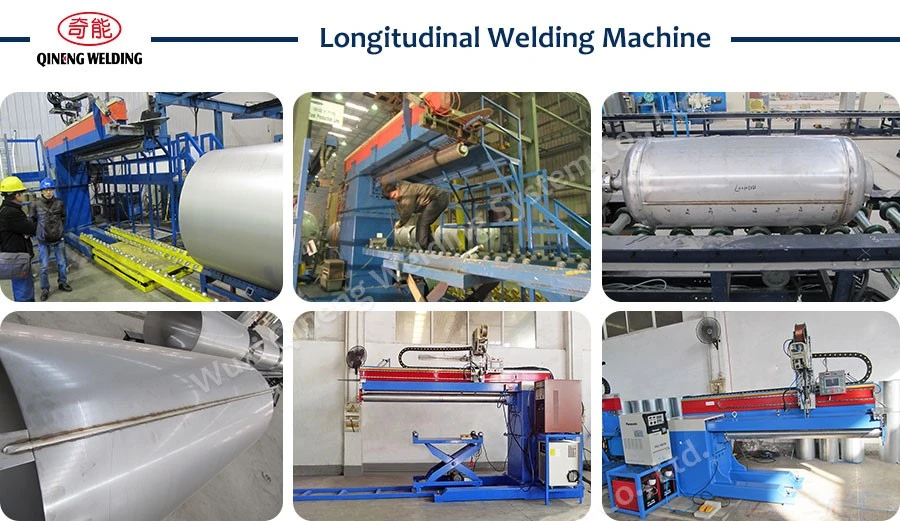

Mechanical parts damage
Reduced precision: If the mechanical parts of the equipment are not properly cleaned and lubricated, impurities such as dust and metal debris will enter the moving parts, such as gears, chains, guide rails, etc. These impurities will aggravate the wear between the parts and cause the precision of the mechanical parts to decrease. For example, after the bottle molding mold is worn, the dimensional accuracy of the bottle will deteriorate and the wall thickness will be uneven, affecting the quality and performance of the gas cylinder.
Component deformation or damage: Long-term neglect of the inspection and tightening of mechanical components may cause screws, nuts and other connectors to loosen due to vibration and other reasons during the operation of the equipment, resulting in the displacement of the position of the components. For example, the loosening of the welding fixture may make the position of the gas cylinder unstable during the welding process, affecting the welding quality. In severe cases, the components may be deformed or damaged due to additional stress, such as bending of shaft parts and cracking of the box, which will increase the maintenance cost and downtime of the equipment.
Electrical system failure
Short circuit and component damage: If the electrical system is not cleaned and moisture-proof, dust accumulation may cause poor heat dissipation of electrical components, and a humid environment may cause electrical components to rust and reduce insulation performance. This may cause short circuit failures and damage electrical components such as contactors, relays, and circuit boards. Once a short circuit occurs, the electrical components may be burned instantly, causing partial loss of function of the equipment, and may even cause safety accidents such as fire.
Parameter loss and production interruption: Failure to regularly check the working status and connection of electrical components, such as sensor failure or loose connection, will cause the equipment to be unable to accurately control the parameters in the manufacturing process. For example, a temperature sensor failure may cause the temperature of the heating equipment to lose control, and a pressure sensor problem may cause abnormal welding pressure or molding pressure. The loss of control of these parameters will cause product quality problems, such as loose welding of gas cylinders and defects in bottle molding. In severe cases, the equipment will automatically shut down and interrupt production.
Welding equipment failure
Welding quality deteriorates: The welding head is a key part of the welding equipment. If the spatter and impurities on the surface of the welding head are not cleaned in time, the conductivity and heat dissipation performance of the welding head will be affected. This will cause arc instability, and defects such as pores, slag inclusions, and unfused welds will appear in the weld, reducing the welding quality and failing to meet the sealing and strength requirements of the vehicle-mounted LNG cylinder. In addition, if the electrode is not replaced in time after wear, the welding quality will also deteriorate.
Failure of gas shielding: Improper maintenance of the shielding gas system, such as insufficient cylinder pressure, gas pipe leakage or gas filter blockage, will result in insufficient shielding gas in the welding area. In this case, the weld is easily oxidized, reducing the corrosion resistance and mechanical properties of the weld, and seriously affecting the quality and service life of the cylinder.
Increased security risks
Personnel safety is threatened: Safety devices such as emergency stop buttons and protective devices are important facilities to ensure the safety of operators. If these devices are not regularly inspected and maintained, the emergency stop button may not work properly and the interlocking function of the protective device may fail in the event of an emergency. This will expose operators to dangerous environments such as mechanical moving parts and high-temperature welding areas, increasing the risk of injury.
Equipment safety accident hazards: Improper maintenance may also cause safety accidents of the equipment itself. For example, due to damage to mechanical parts or electrical system failure, the equipment may experience severe vibrations or flying parts during operation, which will not only damage the equipment, but may also cause serious accidents such as fire and explosion, especially in dangerous environments such as LNG cylinder manufacturing.
In short, the maintenance of the vehicle-mounted LNG cylinder manufacturing machine is by no means an optional link, but a key factor related to the survival of the equipment. If you want to know the damage caused by improper maintenance to the vehicle-mounted LNG cylinder manufacturing machine, welcome to follow www.qinengwelding.com !