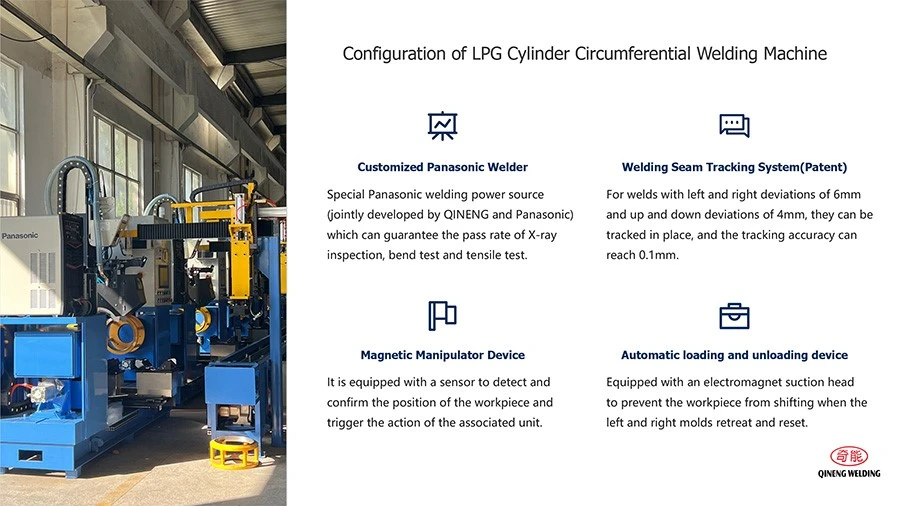

What are the methods of using the low temperature night cylinder welding machine
1. Preparation
Check the equipment: Before using the low-temperature liquid cylinder welding machine, you need to conduct a comprehensive inspection of the equipment. Check whether each component is intact, whether the connection is firm, whether the electrical system is normal, whether the cooling system is unobstructed, etc. Make sure the equipment is in good working condition to avoid failures during the welding process.
Prepare welding materials: According to the material of the cylinder and welding requirements, select appropriate welding materials, such as welding rods, welding wires, shielding gas, etc. Make sure the quality of the welding materials meets the requirements and matches the material of the cylinder.
Clean the cylinder: Clean the surface of the cylinder to be welded to remove impurities such as oil, rust, and scale to ensure welding quality. Cleaning agents, sandpaper, and other tools can be used for cleaning.
Determine the welding position: Determine the welding position and direction according to the design requirements and welding process of the cylinder. Auxiliary tools such as marking tools and positioning fixtures can be used for positioning.
2. Equipment debugging
Adjust welding parameters: According to the material, thickness, welding position and other factors of the cylinder, adjust the welding parameters of the welding machine, such as welding current, voltage, welding speed, shielding gas flow, etc. You can refer to the welding machine's instruction manual and welding process card for adjustment.
Test welding effect: Before formal welding, some test welding can be carried out to check whether the welding parameters are appropriate and whether the welding effect is good. Test welding can be carried out using a test plate to observe the appearance, size, strength and other indicators of the weld. If necessary, non-destructive testing can be carried out.
Adjust the cooling system: According to the requirements of the welding process, adjust the parameters of the cooling system, such as the flow rate and temperature of the coolant, etc. Ensure that the cooling system can effectively reduce the temperature of the welding area and prevent the cylinder from overheating and deformation.
3. Welding operation
Positioning the cylinder: Place the cylinder to be welded on the welding table and fix it with a positioning fixture. Ensure that the position of the cylinder is accurate for precise welding.
Start the welding machine: According to the operating procedures of the welding machine, start the welding machine and move the welding head to the welding position of the liquid cylinder. Adjust the angle and position of the welding head so that it is perpendicular to the surface of the liquid cylinder and maintain a certain distance.
Welding: After confirming that the welding parameters and cooling system are normal, start the welding operation. According to the requirements of the welding process, control the welding speed and welding current to ensure that the quality and size of the weld meet the requirements. During the welding process, pay attention to the appearance and quality of the weld, and make adjustments in time if there are any problems.
Finish welding: When welding is finished, turn off the welding machine power and wait for the weld to cool. After the weld has cooled, check and clean the weld to remove impurities such as welding slag and spatter on the weld surface to ensure that the weld surface is smooth and flat. If necessary, non-destructive testing can be performed to check the quality of the weld.