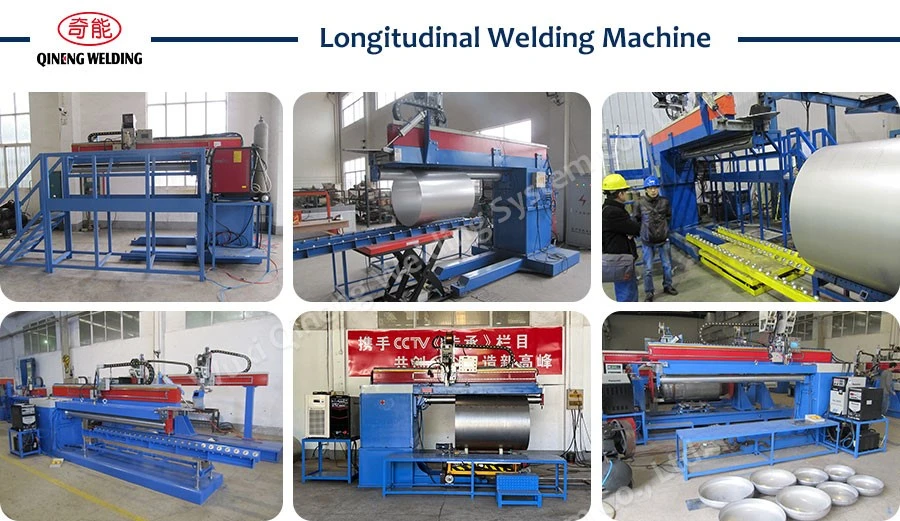

What is the function of the Electrical water heater circular welding machine?
Component connection
Tank manufacturing: The tank of a water heater is usually a sealed container for storing hot water. The welding machine can splice together the various parts of the tank, such as stainless steel plates or steel plates. For example, for a cylindrical tank, the arc-shaped tank plate is welded along the edge into a complete cylinder by a welding machine to ensure the sealing of the tank and prevent hot water leakage. This connection method is more secure and tight than other connection methods (such as bolting or riveting), and can withstand the pressure of hot water inside the tank and long-term wear and tear.
Pipe connection: The water heater has water inlet and outlet pipes, which need to be connected to the inner tank or other parts. The welding machine can accurately weld pipe materials such as copper pipes and stainless steel pipes to the inner tank or other accessories. The connection formed by welding has good fluid tightness, ensuring the normal flow of water inside the water heater without water leakage, and the welded connection can withstand the pressure and temperature changes of the water flow.
Accessory assembly: In addition to the inner tank and pipes, the water heater has many other accessories, such as the mounting bracket for the heating element, the fixing seat for the temperature sensor, etc. The welding machine can firmly weld these small accessories to the corresponding positions such as the inner tank or the outer shell, so that they will not loosen or fall off during the use of the water heater, ensuring the coordinated work between the various parts of the water heater.
Ensure quality and performance
Sealing guarantee: The Enamel water heater circular welding machine can provide good sealing performance for the water heater through high-quality welding processes, such as argon arc welding, laser welding, etc. For water heaters, sealing is very important, which is directly related to the safety and efficiency of water heaters. Good sealing can prevent hot water leakage, avoid damage to user property and the environment caused by leakage, and at the same time ensure that the water temperature inside the water heater is kept within the set range, reduce heat loss, and improve energy efficiency.
Improved strength: The joints formed by welding have higher strength. During the operation of the water heater, the inner tank has to withstand the pressure of hot water, especially during the heating process, the volume expansion of water will cause the pressure in the inner tank to increase. The welded joints can withstand such pressure changes and will not break or deform due to pressure. In addition, welding can also enhance the stability of the entire water heater structure, so that the water heater can maintain a complete structure during transportation, installation and use, and extend its service life.
Improved corrosion resistance: Some advanced welding processes, such as welding under argon protection, can prevent the weld from being oxidized. For metal materials (such as stainless steel) used in water heaters, the welding machine can reduce the risk of corrosion at the weld through appropriate processes during the welding process. This is because there is no intrusion of corrosive media such as air during the welding process, making the corrosion resistance of the weld similar to that of the parent material, thereby improving the overall corrosion resistance of the water heater and extending the service life of the water heater.