

What materials are suitable for Longitudinal Seam Welding Equipment?
1. Carbon Steel and Low-Alloy Steel
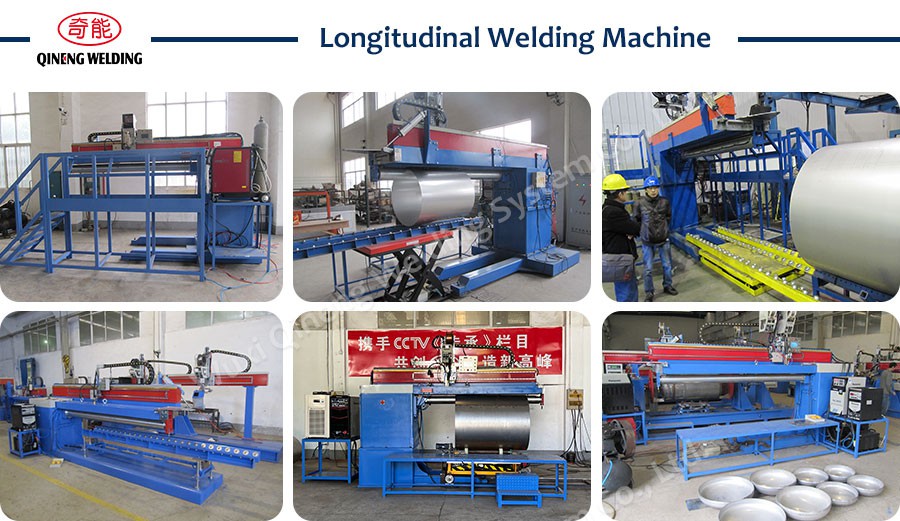
These materials are commonly used with longitudinal seam welding equipment, offering excellent weldability and cost-effectiveness. Whether it's ordinary carbon steel or low-alloy steel containing small amounts of alloying elements, the equipment can achieve stable welding. The weld seam is uniformly formed during the welding process, and the joint strength meets the requirements of most industrial applications. It is widely used in longitudinal seam welding operations in pressure vessels, pipelines, steel structures, and other fields, offering strong adaptability and relatively low welding costs.
2. Stainless Steel
For the corrosion resistance and high strength characteristics of stainless steel, longitudinal seam welding equipment can precisely control welding parameters to reduce oxidation during the welding process and ensure weld quality. Effective welding can be achieved for austenitic stainless steel, ferritic stainless steel, and duplex stainless steel. The weld seam has good toughness and excellent corrosion resistance after welding, making it suitable for industries with high material performance requirements, such as chemical, food, and pharmaceutical industries.
3. Aluminum Alloys
Aluminum alloys are lightweight and have high thermal conductivity, requiring high precision and temperature control capabilities from welding equipment. Longitudinal seam welding equipment can adapt to these characteristics to achieve stable welding. By optimizing the welding process and parameters, welding deformation and porosity defects are reduced, ensuring the strength and sealing of the weld joint. It is widely used in aerospace, automotive manufacturing, rail transit, and other fields, meeting the longitudinal seam welding needs of lightweight products.
4. Copper and Copper Alloys
Copper and copper alloys have excellent thermal conductivity and high melting points. Longitudinal seam welding equipment can achieve effective welding of these materials by increasing energy density and optimizing the welding sequence. The heat input can be precisely controlled during the welding process, reducing grain coarsening in the weld seam and ensuring the conductivity and mechanical properties of the joint. It is suitable for electrical equipment, refrigeration equipment, marine engineering, and other fields, meeting the requirements for material conductivity and corrosion resistance.

If you need Longitudinal Precision Welding for Cylinders, Qineng Welding System is at your service. Our engineering team is available 24/7 to resolve various technical issues remotely or on-site.